Pneumatic actuators, commonly called air cylinders, are the muscle behind countless automated machines. They use compressed air to create motion, making equipment move, grip, lift, rotate, or press with controlled force. What makes pneumatic technology so practical is that air is clean, readily available, and safe compared to hydraulic oils or high-voltage electric systems. This combination of simplicity and power explains why pneumatic systems dominate factory floors, workshops, and production plants all over the world.
Rather than generating continuous rotation like an electric motor, most pneumatic actuators produce straight-line motion that is ideal for pushing and pulling tasks. Other designs provide rotary motion for positioning or turning components. Together, these variations support a wide range of industrial processes.
Basic Working Concept
The operation of a pneumatic actuator is built on pressure differences. When compressed air enters the actuator chamber, it pushes against an internal surface such as a piston or vane. Because air always moves from high pressure to low pressure, this force results in motion inside the unit. When the air is vented or delivered to the other side, the movement reverses.
The amount of force produced depends on the surface area of the internal piston and the level of air pressure supplied. Larger pistons and higher pressure generate more power. Speed is influenced by how fast air enters and exits the actuator, which is controlled through regulators and flow control valves. This makes pneumatic systems highly adaptable: they can move slowly and gently or rapidly and forcefully depending on the task.
Major Categories of Pneumatic Actuators
Air cylinders can be grouped by how they operate and what kind of motion they produce. A spring-return design uses air pressure in one direction and a mechanical spring to move back. These models are often used where the starting position must be restored automatically, such as emergency release systems.
A pressure-driven return design uses air pressure in both directions. This allows equal force and precise positioning, making it ideal for production machinery that requires repetitive, controlled movement.
For tasks involving turning instead of pushing, rotary actuators are the preferred option. These units use vanes or racks and pinions to create rotational motion, typically over a limited angle. They are especially useful in sorting systems and component positioning.
Construction and Engineering Considerations
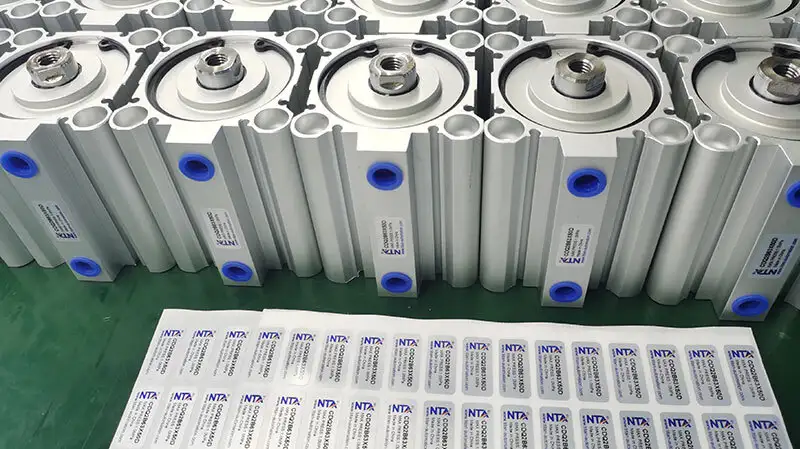
An air cylinder looks basic from the outside, but inside it is a precision device. The outer shell needs to withstand pressure without deforming. Seals keep air from leaking, which is essential for efficiency. The internal surfaces are polished to minimize friction, improving response time and extending service life.
The piston rod is another critical element. It transmits force outward, so it must resist bending and corrosion. Many manufacturers coat rods with protective layers to improve durability in demanding environments.
Other features include built-in shock absorbers to reduce impact at the end of each stroke, and magnetic bands that allow position sensors to track movement. These details improve safety, performance, and system integration.
Areas Where Air Cylinders Are Used
Pneumatic actuators are present in almost every sector of industry. In manufacturing, they handle tasks like pressing, stamping, and material movement. Packaging operations depend on air cylinders to seal boxes and position products. In automotive plants, they support assembly and painting lines.
Hospitals use pneumatic systems in adjustable beds and medical devices. Agriculture relies on them for automated feeding systems and sorting machines. Even entertainment venues use air cylinders in rides and stage equipment for smooth and controlled motion.
Selecting a Reliable Partner
The performance of any pneumatic system depends on the quality of its components. Choosing a trusted pneumatic cylinder manufacturer ensures durability, efficiency, and consistent operation.
Titan Automation has built a reputation as a professional supplier delivering advanced automation solutions. As one of the established pneumatic cylinder suppliers, the company offers complete support from engineering consultation to production and service.
Conclusion
Pneumatic actuators bring movement to life inside machines. By understanding how they work, how they are built, and where they are best applied, businesses can design smarter systems. Working with experienced pneumatic cylinder suppliers ensures that these systems run smoothly, safely, and for years to come.